
Carpal Tunnel Syndrome is one of the most common nerve compression conditions affecting the hand and wrist.
It occurs when an important nerve that passes through a narrow tunnel in the wrist becomes compressed, leading to symptoms such as tingling, numbness, weakness, and discomfort in the hand.
What is Carpal Tunnel Syndrome?
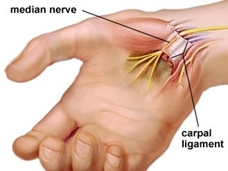
The word “Carpal” refers to the wrist, while “Tunnel” refers to a small passage located within the wrist.
Inside this tunnel pass the tendons responsible for bending the fingers, along with the median nerve, which provides sensation to the thumb, index finger, middle finger, and part of the ring finger.
When the pressure inside this tunnel increases, or the tunnel becomes narrower, the median nerve gets compressed. This condition is known as Carpal Tunnel Syndrome.
Who is at Risk?
Carpal Tunnel Syndrome is most commonly seen in individuals between the ages of 45 and 65 years.
It is more frequently seen in women, although it is increasingly being diagnosed in men as well.
People with the following medical conditions are at higher risk:
- Uncontrolled diabetes
- Hypertension (high blood pressure)
- Thyroid disorders
- Heart disease
- High cholesterol
The condition is also common among people who spend long hours working on computers, particularly those who work for 10 to 15 hours a day.
Pregnancy can also contribute to the development of Carpal Tunnel Syndrome. Hormonal changes during the fourth and fifth months of pregnancy may lead to symptoms, which often improve after delivery.
In younger individuals, prolonged use of mobile phones, gaming devices, and electronic gadgets while maintaining the same wrist position for extended periods may also contribute to nerve compression.
Is Nerve Compression Limited to the Hand?
Many patients assume that symptoms in the hand mean the nerve is compressed only at the wrist. However, this is not always the case.
Some patients experience tingling sensations or electric shock-like feelings that begin in the neck and travel down the arm. In such cases, nerve compression may also be present in the cervical spine.
Others may experience numbness in only two or three fingers, which may indicate compression of a nerve around the elbow.
When tingling and numbness occur in both hands and feet, the condition may be related to neuropathy rather than isolated Carpal Tunnel Syndrome.
Common causes of neuropathy include:
- Vitamin B12 deficiency
- Vitamin D3 deficiency
- Infections
- Chronic alcohol consumption
- Uncontrolled diabetes
- Thyroid disorders
- High cholesterol
Symptoms of Carpal Tunnel Syndrome
The most common symptom is numbness affecting the thumb, index finger, middle finger, and part of the ring finger.
Other symptoms may include:
- Reduced ability to feel hot or cold temperatures
- Numbness while talking on the phone
- Numbness during cooking, writing, or typing
- Tingling sensations during prolonged hand activities
A common symptom experienced by many patients occurs during sleep.
Night-Time Symptoms
Many patients wake up at night because of numbness or discomfort in their hands.
They often shake their hands to relieve the symptoms before returning to sleep. These night-time symptoms can significantly disturb sleep quality.
Weakness of the Hand
As the condition progresses, patients may notice a reduction in grip strength.
The thumb plays a vital role in hand function. In advanced cases of Carpal Tunnel Syndrome, the muscle at the base of the thumb may become weak and flattened.
As a result, patients may find it difficult to perform fine activities such as:
- Tearing rotis
- Threading a needle
- Holding small objects
- Performing delicate hand movements
Diagnosis of Carpal Tunnel Syndrome
The first step in diagnosis is determining whether the symptoms originate from the wrist or another location such as the neck.
If symptoms extend from the neck to the hand, investigations may include:
- Cervical spine X-rays
- MRI scans
These tests help identify whether the nerve is compressed in the cervical spine.
Nerve Conduction Study
One of the most important investigations is a Nerve Conduction Study (NCS).
This test evaluates how well the nerves are functioning and whether nerve signals are being transmitted normally.
Blood Tests
Additional investigations may include:
- Blood sugar levels
- Thyroid function tests
- Cholesterol levels
- Vitamin B12 levels
- Vitamin D3 levels
These tests help identify medical conditions that may contribute to nerve compression symptoms.
Treatment of Carpal Tunnel Syndrome
The most important aspect of treatment is lifestyle modification.
For individuals who spend long hours working on computers:
- Core strengthening exercises are beneficial.
- Muscle strengthening exercises should be performed before and after work.
- Proper posture should be maintained during daily activities.
Simple lifestyle measures such as spending 15–20 minutes in the morning sunlight can help improve Vitamin D3 levels and reduce symptoms.
Managing underlying medical conditions such as diabetes, thyroid disorders, and high cholesterol under the guidance of a physician can also significantly improve symptoms.
Surgical Treatment
If symptoms persist despite conservative treatment, surgery may be recommended.
Common surgical procedures include:
- Open Carpal Tunnel Release
- Endoscopic Carpal Tunnel Release
These procedures provide significant symptom relief in approximately 90–95% of patients.
Some patients present late with severe thumb weakness and loss of hand function. In such cases, more advanced reconstructive procedures can help restore hand function safely and effectively.
Screen Time and Children
Excessive use of mobile phones and electronic gadgets is becoming increasingly common among children.
Studies suggest that children’s screen time should ideally be limited to approximately one to one-and-a-half hours per day.
Maintaining poor posture while using mobile devices for prolonged periods can contribute not only to Carpal Tunnel Syndrome but also to cervical spine problems.
Using gadgets in awkward sitting or lying positions may lead to musculoskeletal problems that can become increasingly common as children grow older.
Moving Forward with Confidence
Carpal Tunnel Syndrome is a highly preventable and treatable condition.
Persistent tingling, numbness, weakness, or night-time symptoms should not be ignored. Early diagnosis, appropriate investigations, lifestyle modifications, management of underlying medical conditions, and timely treatment can help prevent long-term complications and restore normal hand function.
This Blog post has been published for patient information purposes by Pinnacle OrthoCenter Hospital.
For more information, contact us: 02240763000 / 7028859555.





0 Comments