
As parents, watching your child struggle to run, jump, or play because of leg alignment issues can be concerning. One of the most common conditions affecting growing children is knock knees (Genu Valgum), where the knees angle inward while the ankles remain apart. Although mild knock knees are a normal part of childhood development, severe cases can affect mobility, posture, confidence, and long-term joint health.
At Pinnacle Orthocentre, we believe that early diagnosis and timely treatment can help children achieve proper leg alignment without major surgery. Using advanced guided growth techniques, including Percutaneous Epiphysiodesis using Transphyseal Screws (PETS), we can naturally correct many lower limb deformities while your child continues to grow.
In this blog, we’ll explain how guided growth works, when treatment is necessary, and why early intervention can help avoid more complex procedures like total knee replacement, robotic knee replacement, or arthroscopic surgery later in life.
Understanding Knock Knees (Genu Valgum)
Knock knees occur when the knees touch each other while the ankles remain apart when standing. This condition is common in children between the ages of 2 and 7 years and often corrects itself naturally.
However, if the deformity:
- Persists beyond the expected age
- Continues to worsen
- Causes pain or difficulty walking
- Affects only one leg
- Leads to frequent falls or an unusual gait
it should be evaluated by an experienced orthopaedic specialist.
Without proper treatment, abnormal alignment can place excessive pressure on the knee joint, increasing the risk of cartilage damage, ligament strain, and early arthritis in adulthood.
Why Early Treatment Makes a Difference
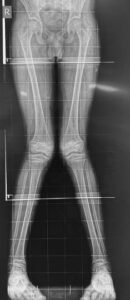
Children’s bones are still growing, which provides a unique opportunity to correct alignment naturally.
Instead of performing major corrective bone surgery, orthopaedic surgeons can gently guide the growth plate so the leg gradually straightens as the child grows.
This approach is known as guided growth and is one of the safest and most effective treatments for growing children with angular deformities.
Guided Growth with PETS Screws
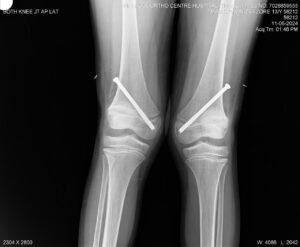
At Pinnacle Orthocentre, we commonly perform Percutaneous Epiphysiodesis using Transphyseal Screws (PETS) for suitable children with knock knees, bow legs, and other angular deformities.
The procedure is designed to work with your child’s natural growth rather than against it.
Benefits of PETS Guided Growth
- ✅ Minimally invasive — just a tiny screw
- ✅ No bone cutting, no plates, no long scars
- ✅ Child walks the next day
- ✅ Body corrects itself naturally as it grows
- ✅ Screw removed once correction is achieved
- ✅ Excellent long-term results
- Faster recovery
The screw temporarily guides the growth plate, allowing one side of the bone to grow slightly slower while the opposite side continues normal growth. Over several months, the legs gradually become straight.
A Real Success Story
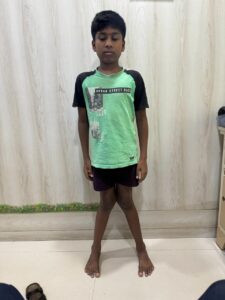
One of our memorable patients was a 12-year-old boy with significant knock-knee deformity. His inward angulation made running, playing sports, and even walking comfortably increasingly difficult.
His parents were understandably anxious about surgery.
After careful evaluation, our orthopaedic team recommended guided growth using a single PETS screw on each side.
The procedure involved:
- Small incisions
- Minimal tissue disruption
- No casts
- Short hospital stay
Most importantly, the child was able to walk the very next day.
Over the following months, nature took over.
As he continued growing, the PETS screws gently directed the growth plates, allowing both legs to gradually straighten. At follow-up visits, the improvement was remarkable, and today his leg alignment has been beautifully corrected.
This case perfectly demonstrates how early intervention can transform a child’s mobility with minimal surgical intervention.
Conditions Treated with Guided Growth
Guided growth is effective for several lower limb deformities, including:
- Knock knees (Genu Valgum)
- Bow legs (Genu Varum)
- Angular deformities around the knee
- Growth plate-related alignment problems
- Certain limb length discrepancies (selected cases)
Each child receives an individual assessment to determine whether guided growth is the most appropriate treatment option.
What Happens During Recovery?
One of the biggest advantages of PETS guided growth is the quick recovery.
Most children can:
- Walk within 24 hours
- Return to school within a few days
- Resume light daily activities soon after surgery
- Gradually return to sports as advised by their surgeon
Regular follow-up appointments are essential because the correction happens gradually over several months. Once the desired alignment is achieved, the screws are removed through another small procedure.
Can Untreated Knock Knees Cause Problems Later?
Yes.
If significant knock knees remain untreated into adulthood, uneven weight distribution across the knee joint can accelerate cartilage wear.
Over time, this may contribute to:
- Chronic knee pain
- Meniscus injuries
- Ligament problems
- Early osteoarthritis
- Difficulty walking
- Reduced physical activity
Adults with severe knee damage caused by long-standing deformities may eventually require advanced procedures such as arthroscopic surgery for certain joint conditions or total knee replacement when arthritis becomes advanced.
Fortunately, many children treated with guided growth never progress to these advanced conditions because the underlying alignment issue is corrected early.
Why Choose Pinnacle Orthocentre?
At Pinnacle Orthocentre, our orthopaedic specialists are committed to providing personalised care for children and adults with musculoskeletal conditions.
We focus on:
- Accurate diagnosis
- Advanced minimally invasive techniques
- Child-friendly treatment plans
- Modern orthopaedic technology
- Comprehensive rehabilitation
- Long-term follow-up for optimal outcomes
Our goal is not just to treat the condition but to help every child regain confidence, mobility, and an active lifestyle.
When Should You Consult an Orthopaedic Specialist?
Schedule an evaluation if your child:
- Has persistent knock knees after the age of 7–8 years
- Complains of knee pain while walking or running
- Frequently trips or falls
- Has one leg more affected than the other
- Finds it difficult to participate in sports
- Shows worsening leg alignment over time
Early assessment allows for simpler, more effective treatment while your child’s bones are still growing.
Conclusion
Knock knees don’t always require treatment, but when the deformity is significant, early intervention can make a life-changing difference. Guided growth with PETS screws offers a minimally invasive, safe, and highly effective way to correct leg alignment naturally—without breaking bones or prolonged recovery.
At Pinnacle Orthocentre, we have helped many children return to running, playing, and enjoying life with improved confidence and healthy leg alignment. By addressing the problem during the growing years, we can often prevent future joint damage and reduce the likelihood of complex procedures such as arthroscopic surgery, total knee replacement, or robotic knee replacement later in life.
If you’re concerned about your child’s leg alignment, consult the experienced orthopaedic team at Pinnacle Orthocentre for an early assessment and personalised treatment plan.
FAQs
1. At what age should knock knees be evaluated?
Mild knock knees are normal in young children, but if the condition persists beyond 7–8 years, worsens, or causes pain, an orthopaedic evaluation is recommended.
2. Is PETS guided growth a major surgery?
No. PETS is a minimally invasive procedure performed through small incisions without cutting the bone, allowing children to recover quickly.
3. How long does guided growth take to correct knock knees?
Correction occurs gradually over several months as the child grows. Regular follow-up appointments help monitor progress and determine the right time for screw removal.
4. Can untreated knock knees lead to arthritis?
Yes. Severe untreated knock knees can cause uneven stress on the knee joint, increasing the risk of early osteoarthritis and future procedures such as total knee replacement or robotic knee replacement.
5. Is arthroscopic surgery used to treat knock knees in children?
No. Arthroscopic surgery is generally used to diagnose and treat certain knee joint problems, such as ligament or meniscus injuries. Guided growth with PETS screws is the preferred treatment for suitable children with knock knees.
0 Comments