
Syndactyly the medical term for webbed fingers or toes is one of the most common differences children are born with.
It is not a “disability” in the traditional sense; rather, it is a small variation in how your child’s hand or foot developed during the very earliest stages of life.
What is Syndactyly?
At its simplest, syndactyly is the failure of the fingers or toes to separate into individual digits. It can range from a thin layer of skin connecting two fingers (simple syndactyly) to cases where the underlying bones are also fused (complex syndactyly).
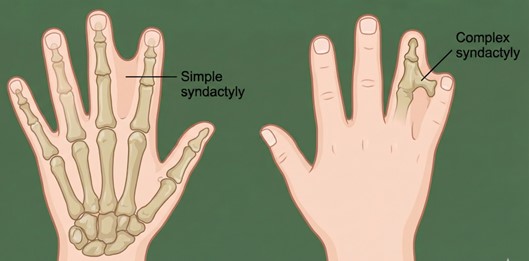
Diagram 1: Simple vs. Complex Syndactyly
Most often, syndactyly occurs as an isolated finding, meaning the rest of the baby’s development is perfectly typical.
Why Did This Happen? (The Embryology)
To understand why syndactyly happens, we have to look back at the first few weeks of pregnancy. Around the sixth week of gestation, a baby’s hands and feet don’t have fingers yet.
Instead, they look like solid, paddle-shaped mittens. The following diagram shows this developmental process.
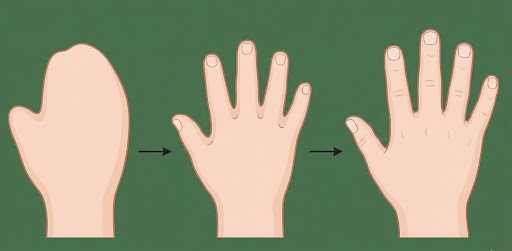
Diagram 2: Embryonic Hand Development
The separation of fingers occurs through a biological process called apoptosis, or programmed cell death. Think of it like a sculptor: the “mitten” is the block of stone, and apoptosis is the chisel that removes the extra material to reveal the fingers.
In cases of syndactyly, that “chiseling” process stops slightly early in one or more areas, leaving a connection behind. It is a purely biological timing event, not caused by anything you ate, did, or experienced during pregnancy.
Why the 4th Web Space?
Parents often ask why the webbing frequently occurs between specific fingers. In the hand, the most common site is the fourth web space—the area between the ring finger and the pinky finger.
The reason for this lies in the sequence of hand development. During embryology, the fingers separate in a specific order, usually starting from the thumb side and moving toward the pinky.
The fourth web space is the last to separate. Because it is the final “zipper” to be undone, it is statistically the most likely area to remain joined if the separation process is interrupted or slowed down.
Moving Forward with Confidence
The good news is that pediatric orthopedics has refined the treatment for syndactyly over decades.
If the webbing affects the function of the hand or the growth of the fingers, a relatively straightforward surgical procedure can separate the digits, usually performed when the child is between one and two years old. The image below shows what a hand looks like after this procedure.
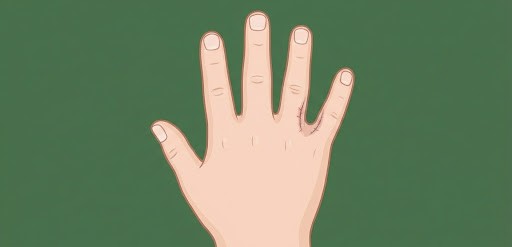
Diagram 3: Post-Surgical Outcome
Your child’s hand is a tool for exploration, play, and connection. Whether we choose to monitor the condition or proceed with a surgical release, our goal is the same: to ensure your child has a hand that works beautifully and allows them to navigate the world without limits.
To know more about treatment of syndactyly and what it entails, fix an appointment with our Paediatric Orthopaedic/ Hand surgery departments
This Blog post has been published for patient information purposes by Pinnacle OrthoCenter hospital.
For more information, contact us 02240763000/ 7028859555.


0 Comments